
The original ‘Ghostrunner’ stood out as a beacon of linear brilliance amidst a sea of mediocre open-world games upon its release in 2020. Despite some insignificant issues, such as brevity, the game excelled in parkour mechanics, intense action, and unforgiving gameplay. Players were left yearning for more, making the announcement of a sequel a welcomed development.
For a game like ‘Ghostrunner,’ a sequel need not reinvent the wheel. It should preserve the original mechanics while enhancing them, ensuring smooth level progression and granting players the freedom to conquer them uniquely. Above all, it should innovate while staying true to its core. To what extent has ‘Ghostrunner 2’ achieved this balance, and what missteps has it taken? Let’s delve into a closer examination.
Story:
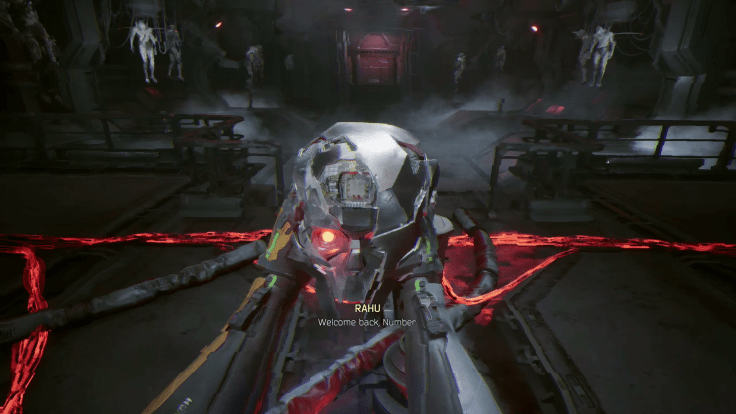
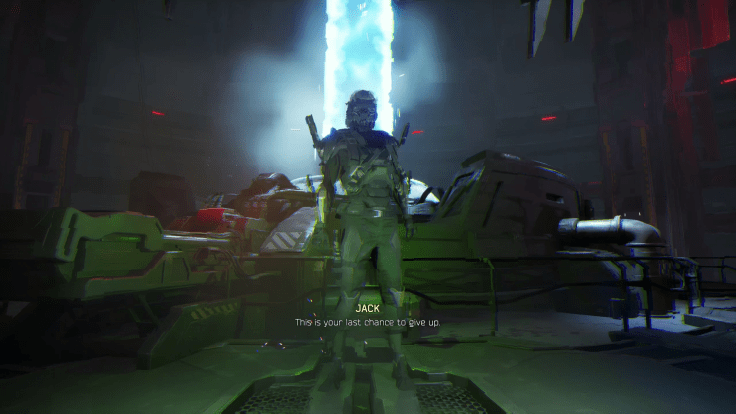
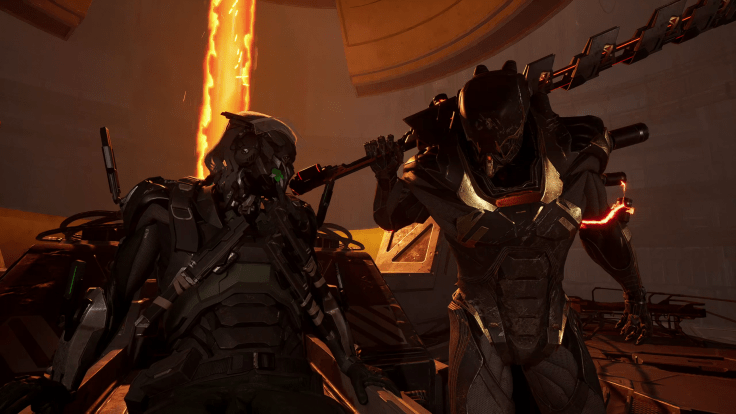
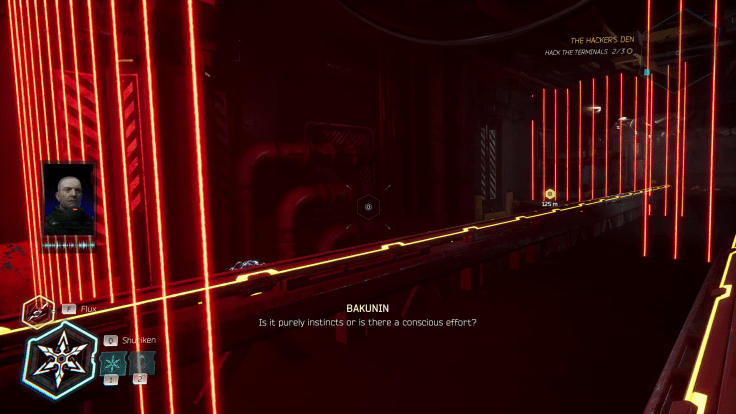
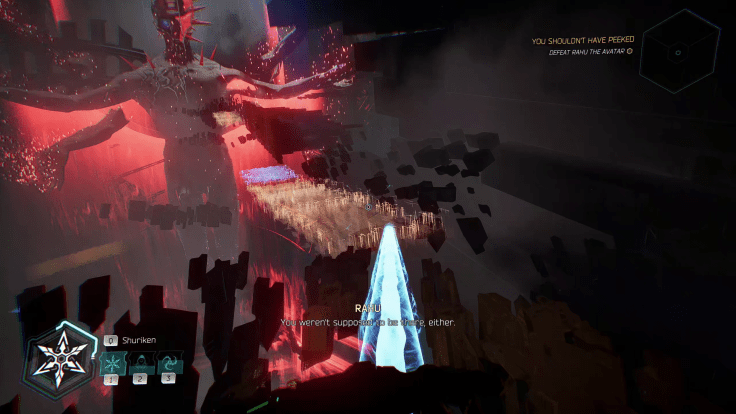
The narrative unfolds a few years after the events of the original Ghostrunner, where Jack, the Ghostrunner, has aligned with the Climbers, the rebel group introduced in the first game. Their collective aim is to maintain peace amidst the conflict between rival gangs within Dharma Tower. However, tensions escalate when the first Ghostrunner, Mitra, is unexpectedly resurrected.
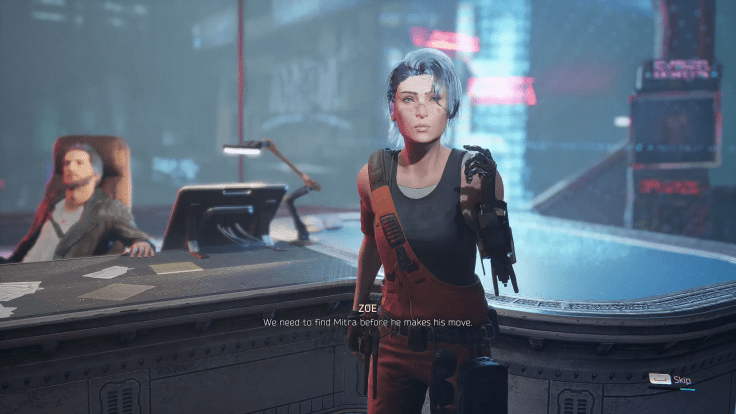
Regrettably, aside from Mitra, none of the side characters receive substantial development. One potentially intriguing character, Connor, meets an early demise in an attempt to evoke emotional resonance. However, since he had yet to be adequately developed, his passing failed to elicit much emotional impact. The overall lack of character development is exacerbated by lacklustre writing. While there are moments where the delivery elevates the writing, these instances are infrequent and scattered.
The story’s primary function appears to be connecting the various levels rather than delving into character depth or complexity.
Sound:
The background score in Ghostrunner 2 is robust, featuring a heavy rock beat that avoids the overpowering intensity of metal music. Notably, the soundtrack undergoes frequent changes, preventing the monotony of a single track throughout the game. Importantly, the volume of the background score is balanced, allowing players to discern essential audio cues while maintaining an adrenaline-inducing atmosphere.
While special effects are not subpar, they fall slightly behind the strength of the background score. Although they could benefit from being a tad louder, the sheer variety of effects is commendable.
In terms of voice acting, the performances range from decent to exceptional. Jack’s voice actor deserves particular recognition for delivering lines with great proficiency, followed closely by Kira and Connor. While other voice performances may not reach the same heights, they do not significantly detract from the gaming experience.
Graphics:
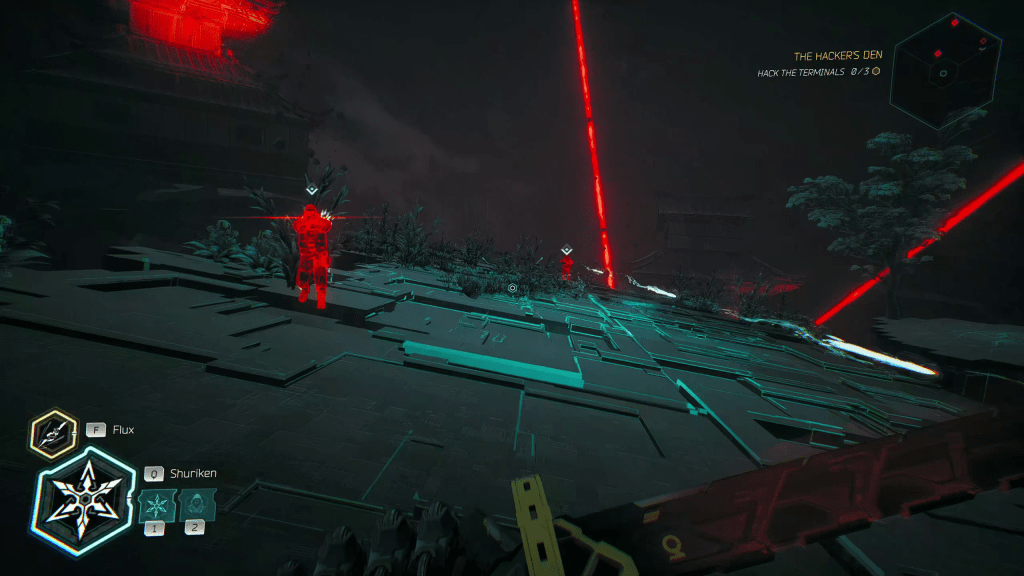
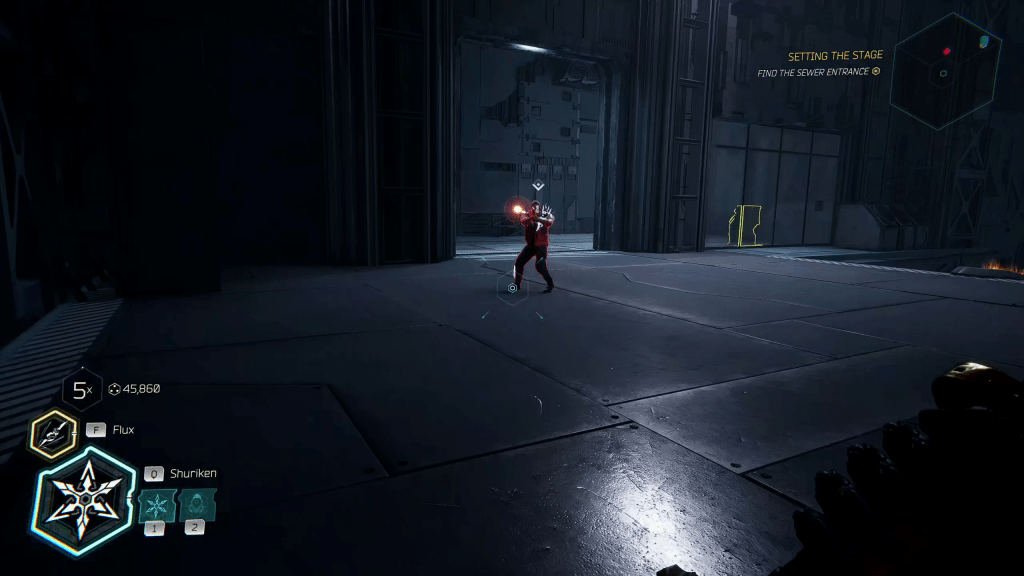
The graphics in Ghostrunner 2 are commendable. The dystopian setting, avoiding an overwhelming neon aesthetic, is particularly well-executed. The choice of colours for enemies is effective, allowing them to stand out without disrupting the theme. This extends to enemy ranged weapons and markers, which are brightly coloured, enhancing visibility and aiding players in dodging incoming threats. The meticulous attention to detail ensures that a quick glance at the screen provides ample information about obstacles in the player’s path.
Beyond their aesthetic appeal, the graphics serve a crucial function in providing feedback to the player. Ghostrunner 2 excels in this aspect, employing visual cues such as blood on the screen to signify hits, a subtle camera shake to highlight blocks, and halos on enemy weapons to warn players about impending bullet attacks. This thoughtful integration of visual elements enhances both the game’s visual appeal and its functionality as a dynamic and responsive gaming experience.

Gameplay:
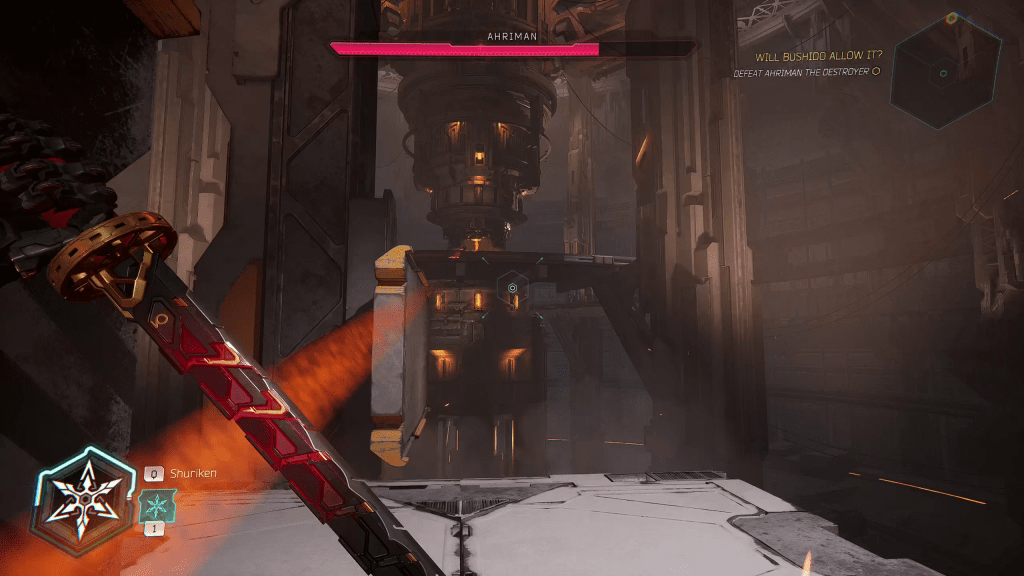
Ghostrunner 2, much like its predecessor, adopts a linear hack-and-slash format. As the Ghostrunner, players traverse the environment, swiftly dismantling everything in their path. The challenge lies in the fact that a single hit results in death, mitigated only by the protagonist’s remarkable parkour skills. These skills allow for dynamic movements such as running, sliding, rail grinding, wall running, swinging, and grappling to platforms—essential tactics for dispatching enemies before they can retaliate. The gameplay unfolds frenetically, requiring players to deftly dodge, block, and engage with hordes of adversaries.
Despite being the sole weapon in the game, the sword proves more versatile than its appearance suggests. With a decent reach, it can efficiently dispatch groups of enemies with a single blow. The sword also serves a defensive role, blocking enemy attacks and projectiles as long as the Ghostrunner has stamina. Additionally, it can be employed to counter enemy attacks and redirect bullets. Complementing the sword are various abilities and ultimates. Abilities, relying on energy that regenerates over time, include Dash, Heightened Senses, Shurikens, Shadow (providing temporary invisibility and a decoy), and Tempest (a cyclone pushing enemies away). Ultimates, powered by energy regenerated through enemy kills, consist of Surge (a lethal laser beam), Overdrive (time slowdown for enemies), and Blink (teleportation between targets for instant kills).
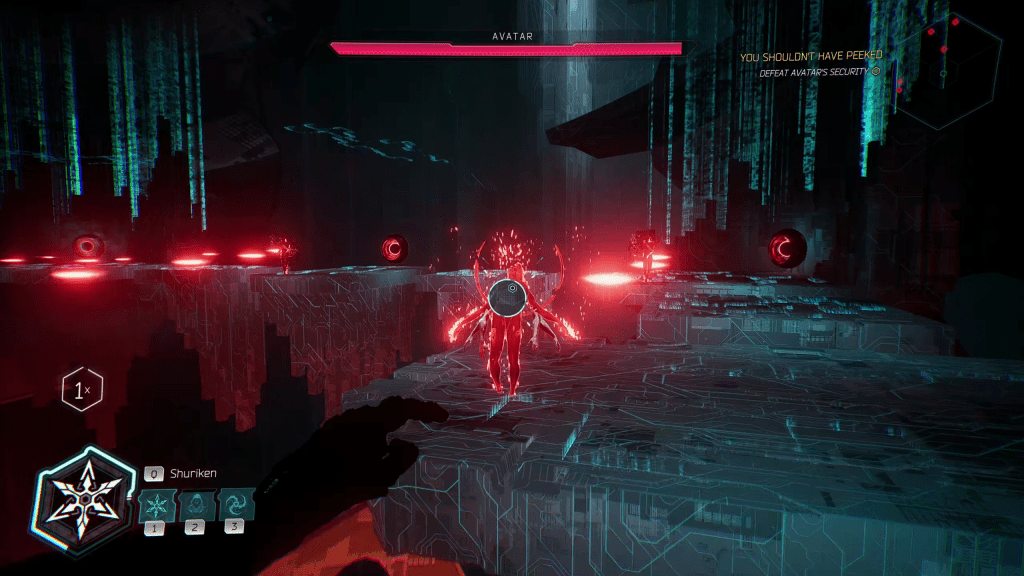
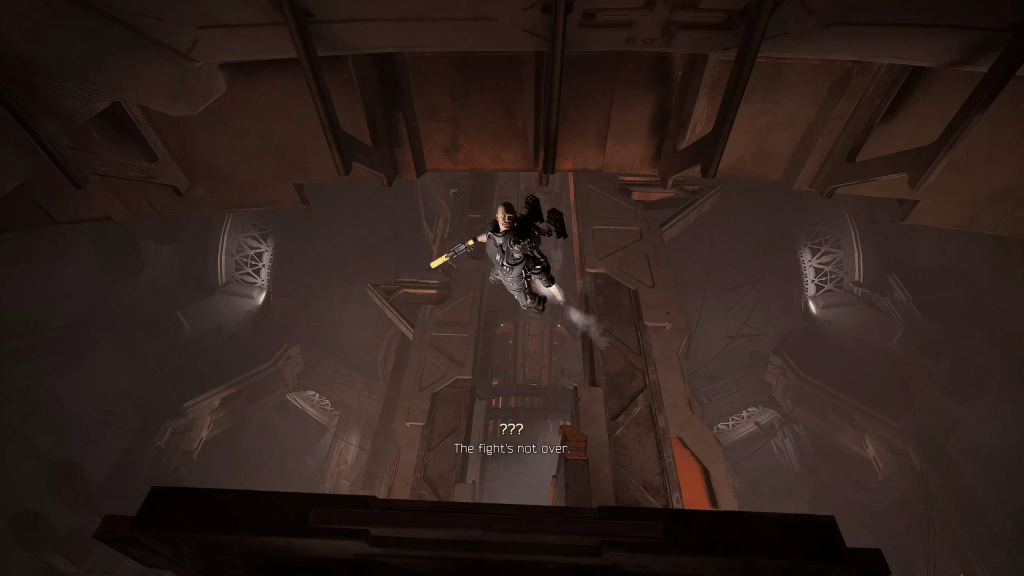
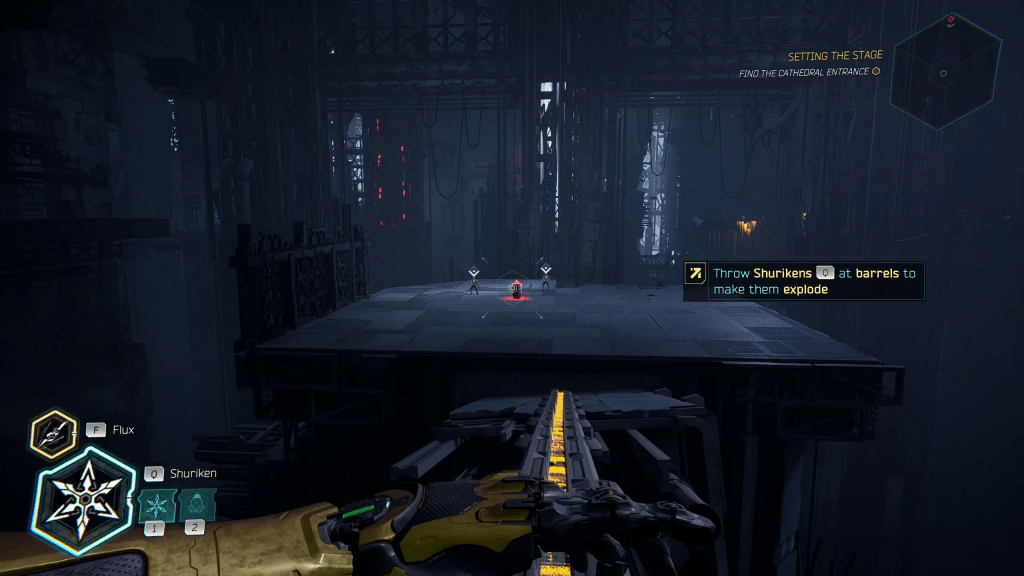

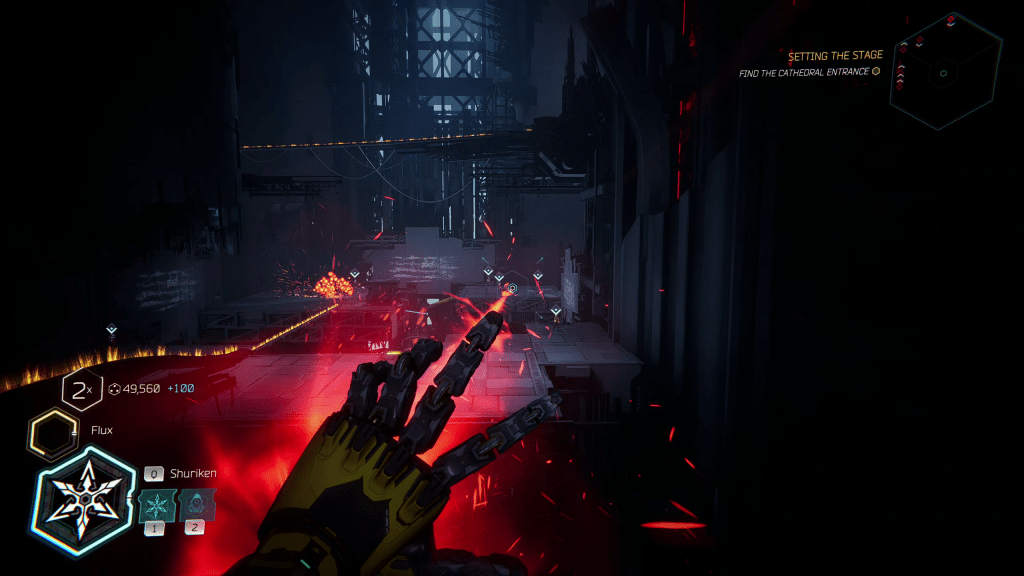
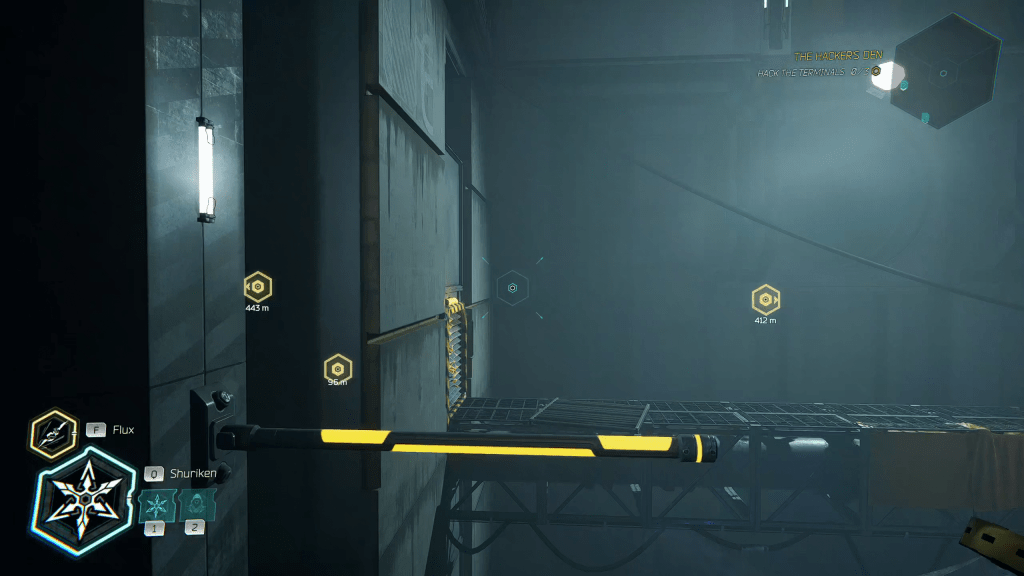
While the sword provides a satisfying combat experience, the parkour mechanics are equally crucial. Levels with good design enhance the effectiveness of these mechanics. The game’s levels are primarily linear and can be categorised into combat arenas and connections. Combat arenas, filled with enemies, demand strategic navigation using parkour skills. These areas evolve in complexity, introducing walls, rails, and grapple points. Navigating these arenas provides a sense of accomplishment despite their increasing difficulty. Connection areas, on the other hand, focus on parkour without the distraction of enemies, requiring precise jumps and dashes. As the game progresses, these areas become more challenging while remaining enjoyable.
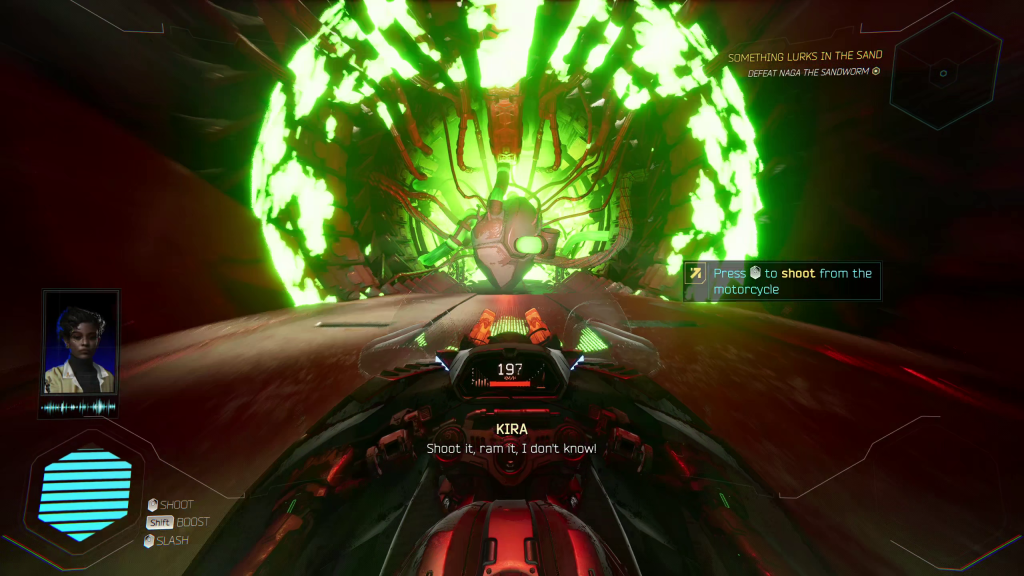
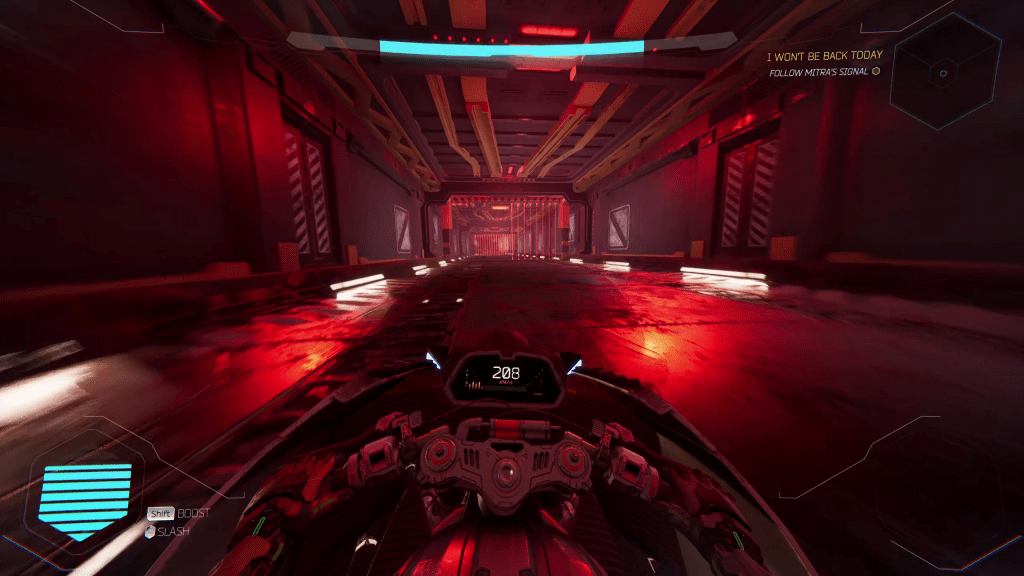
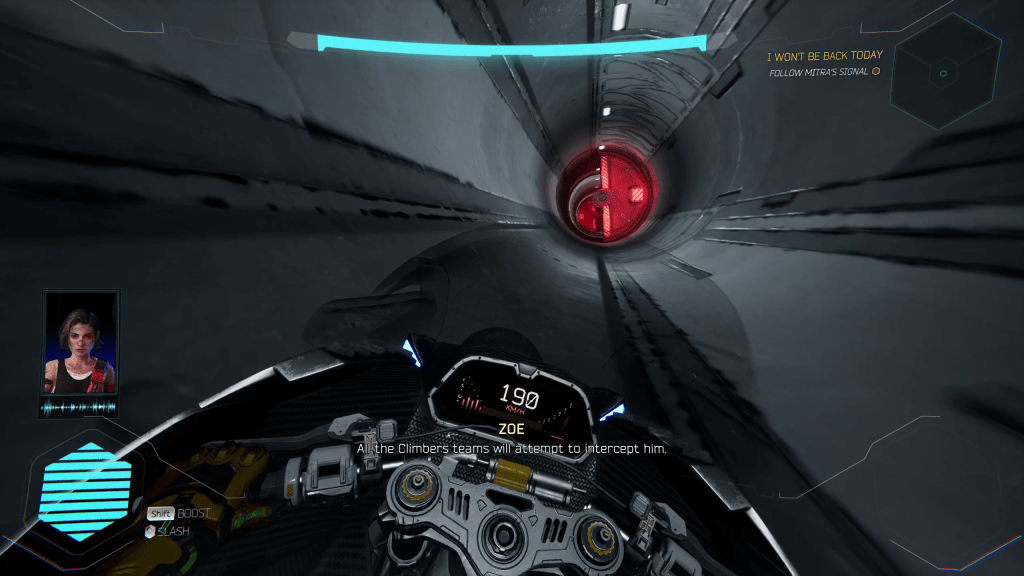
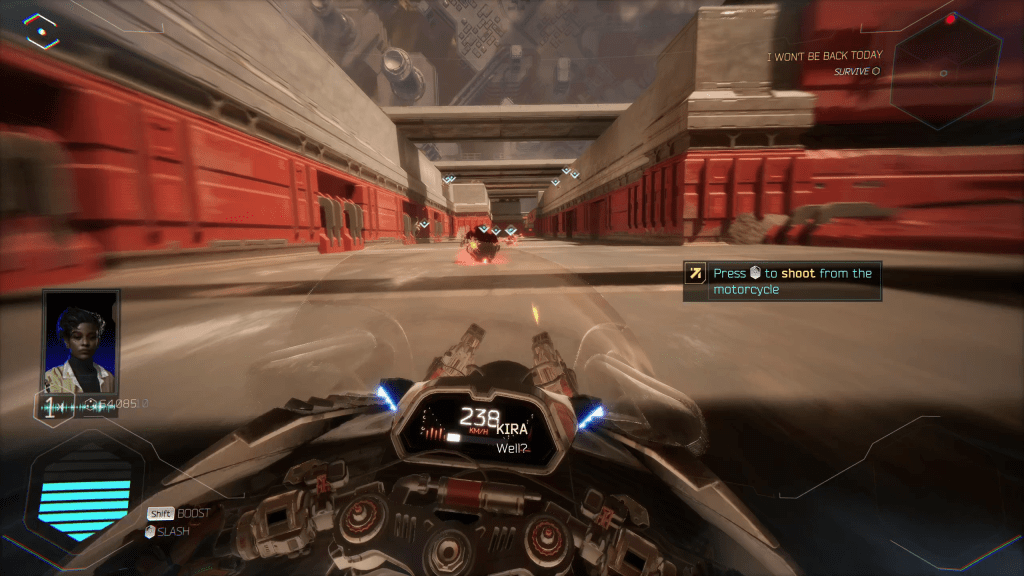
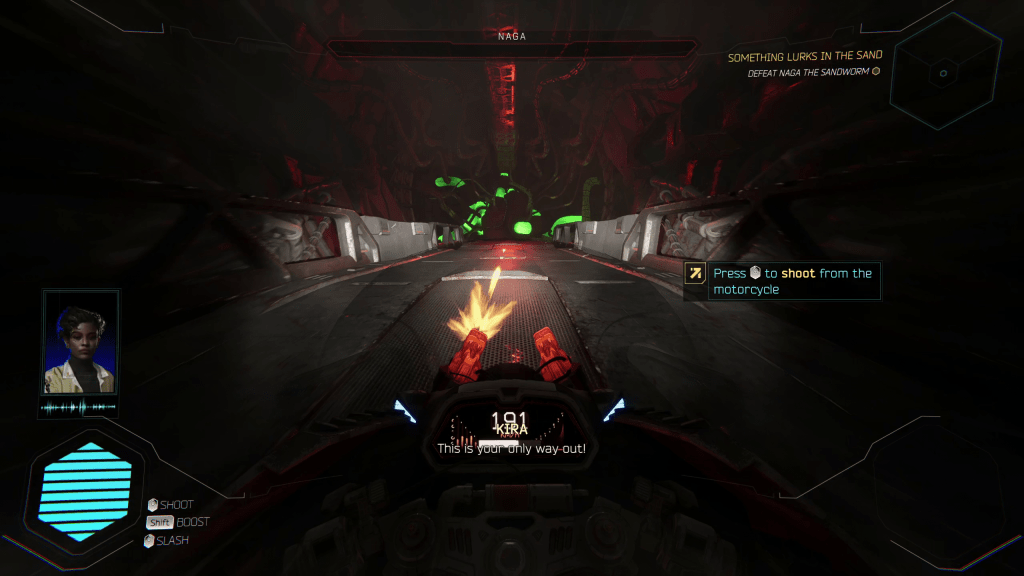
Ghostrunner 2 introduces variety by incorporating a bike and wingsuit, each featuring dedicated levels. The bike levels offer exhilarating experiences, especially the introduction (I Won’t Be Back Today), showcasing Jack speeding through diverse environments, including walls and pipes. However, some middle levels (Winds of The Desolate and Pillars of Creation) suffer from excessive size and filler, detracting from the overall enjoyment. The fourth bike level (Something Lurks In The Sand) stands out by exploring the insides of a mechanical worm. The wingsuit, unfortunately, limited to a single level, adds speed and dynamics to gameplay but leaves players yearning for more.
Before concluding, it’s crucial to discuss the upgrade system, which, in my opinion, has experienced a downgrade since the previous game. In the original game, players could strategically arrange as many upgrades as possible on a grid, showcasing their skill in optimization. These upgrades didn’t necessarily need to have any thematic relation. However, this system has been replaced by a more conventional approach. Now, players can apply upgrades to five out of the available eight systems, as long as Jack has sufficient RAM.
The limitation to five systems creates a scenario where experimenting with different combinations becomes less frequent. The need for thoughtful consideration of upgrades can sometimes turn the process into more of a task than a puzzle. The loss of the Tetris-style placement system diminishes the engaging aspect of upgrading, making it a more straightforward and less dynamic aspect of the game.
Conclusion:
Ghostrunner 2 successfully delivers what many enthusiasts desired in a sequel to one of the standout games of 2020. Maintaining the original’s tone, the game introduces fresh elements and addresses some of the prior flaws. While there are areas that could benefit from further refinement, overall, it offers a thrilling, adrenaline-fueled adventure that resonates with players seeking a challenging experience without crossing into unfairly overwhelming territory.
We have a complete playlist of all the levels:
|
Pros |
Cons |
| Great, linear Missions | 2 Bike missions are too long |
| Great swordplay and abilities | Weaker upgrade system |
| Great sound | Average voice acting |
| Varied enemies | NA |
| Fun gameplay | NA |
 Generic Gaming Blog
Leave a comment